 TR
TR ES
ES PD
PD AF
AFTESTING ROOM Components
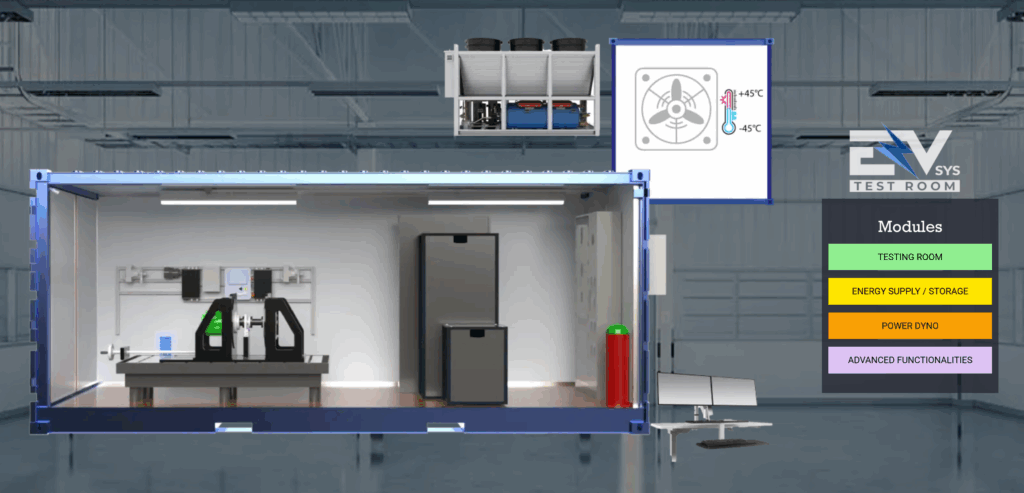
EVSYS is an EV Testing Room, a flexible, cost-effective, and mobile test facility built inside a containerized structure. It’s an ideal solution for developing and testing e-powertrains and related components.
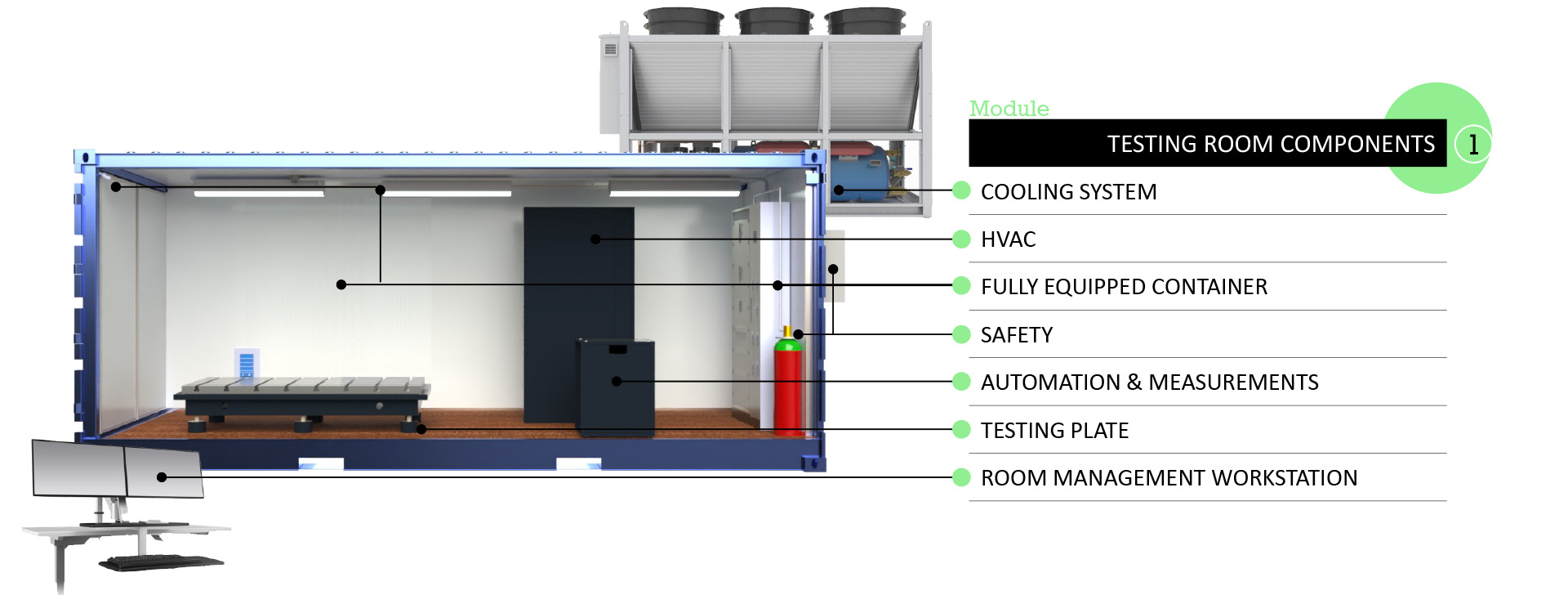
EV Testing Room is a “Self-Integrated-Safety” room inside a fully equipped container
Soundproofing Panels

All the internal walls and doors are equipped with panels with these features:
– Thickness: 50mm
– Insulation: -31 dB
– Absorption: AW=0.90
– Certification: CAM, BREEAM
– Fire reaction class: A2-s1,d0
– EI30
Testing Plate
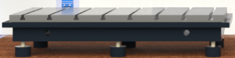
Main features:
– Made of EN-GJL-250
– Surface machined to DIN 876/III
– Transversal and longitudinal T-slots to DIN 650-28H12
– 6 regulating elements vibration-cushioned type RSe30-200
– including oil channel made of U-profile
Fire Detection, Extinguishing & Safety Management
– Temperature notifier
– Smoke notifier
– Extinguishing system
– Fire control unit
– Safety PLC
– Safety management interface on automation HMI
Remote monitoring
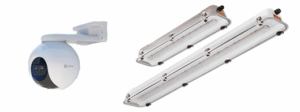
– Camera Control
– Internal lighting
Chillers & Cooling plant
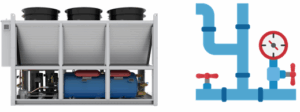
CustoM 2.0 provides n. 1 chiller for the cooling of the bench equipment and n. 1 regulated chiller for the DUT
HVAC
The HVAC (Heating, Ventilation, and Air Conditioning) is a system used to regulate indoor temperature.
To obtain reliable and significant results from the tests carried out inside the test room, CustoM 2.0 integrates the HVAC system to maintain a fixed temperature of 25°C during testing cycles.
Automation and Control
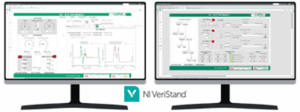
The Automation and Control is based on National Instruments® NI-PXIe® with its communication and control boards and the Control Fanless PC.
The software NI VeriStand® is able to process, as an input of the testing room, the virtual models coming from Mathworks®. The automation of the testing and measurements allows an easier use by the operator and the reporting of the tests.
Measurements – Power Analyzer

The Measurements are done with the HBK® Genesis GEN4tB® system with its acquisition modules and sensors.
The HBK solution composed by the Hardware Genesis and the Software Perception together with the current sensors and the torquemeter has a native synchronization of the measurements of the electric power with the mechanical power.